Shreya leads an online Writers Clinic for Nottingham Writers Studio every month, which has been called ‘brilliant’, ‘engaging and encouraging’ and ‘valuable’! It is now open to non-members

Here’s what the Nottingham Writers Studio has posted about it:

“Ahead of next Friday’s ‘The Writers’ Clinic’ with Shreya Sen Handley, we caught up with Shreya to give you a little background into why these friendly accessible sessions might just be what you are looking for.

❓ So Shreya, what is a ‘writers’ clinic’ and why is this different to other kinds of mentoring sessions?

☑ A writers’ clinic is like an appointment with the doctor where you can discuss the writing issues that are troubling you with an experienced practitioner and get answers and solutions. But like a therapy group session, there are a limited number of peers involved to provide the benefit of their experience too, and extend support, as will the writing expert holding the clinic. It is different, therefore, in the range and variety of the support you receive, both in terms of the different perspectives offered and the topics that you are able to broach, which is anything at all to do with creative writing!

❓ What are the other benefits to group mentoring sessions?

☑ Ask anything writing-related of a hugely experienced writer who has worked in a vast range of genres, art forms and industries, from media to publishing to theatre, with decades of teaching and mentoring experience as well, all of which they will draw on to come up with practical, creative, and thoughtfully bespoke solutions for each of you.

☑ Hear about the experiences of other writers, at different stages of development and from a range of backgrounds with all the knowhow that will bring to the session.

☑ Find common ground with them, consider whether the solutions that worked for them will work for you.

☑ Help them, in turn, with writing problems you have been able to resolve for yourselves, which can be very rewarding too.

☑Bask in the warmth of support.

❓ What types of writing concerns do writers bring to your sessions?

☑ Your questions and concerns are not limited to any one literary genre, form or industry, and you can table any creative writing problem, big or small, that has plagued you, recently or for years.

Wow, thank you Shreya, That’s some really good support there!

If you would would like to know more, or book a spot for some expert support, the link is in the comments.

🧡All writers welcome!”

And here’s how to join: https://www.eventbrite.co.uk/e/the-writers-clinic-tickets-2002425065274?fbclid=IwdGRjcAVQNlhleHRuA2FlbQIxMQBwZG9mBXNydGMGYXBwX2lkDDM1MDY4NTUzMTcyOAABH79sODz96XHXUlkqFmwdWRYktDLJQxK–MUpLxwZw2FeKYuGAQtIZ7hS7vW7_aem_HxQ7_33OUvhdly40K-KWgg&aff=oddtdtcreator

Shreya celebrated as”illustrious alumna” by her renowned alma mater, Loreto College, of the venerable University of Calcutta (even their prospectus mentions her)!

Here she is on page 9, at the start of their alumnae section. She is also featured on their website, although we should probably get in touch with them to update their biography, as she’s done a thing or two, including two books, since this was posted!

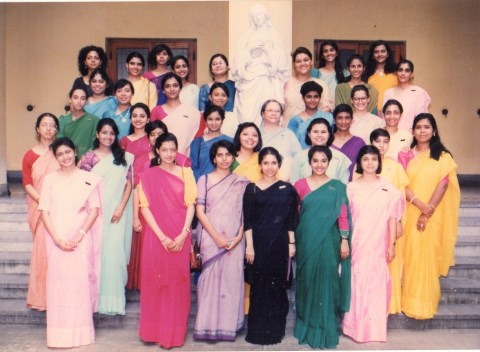
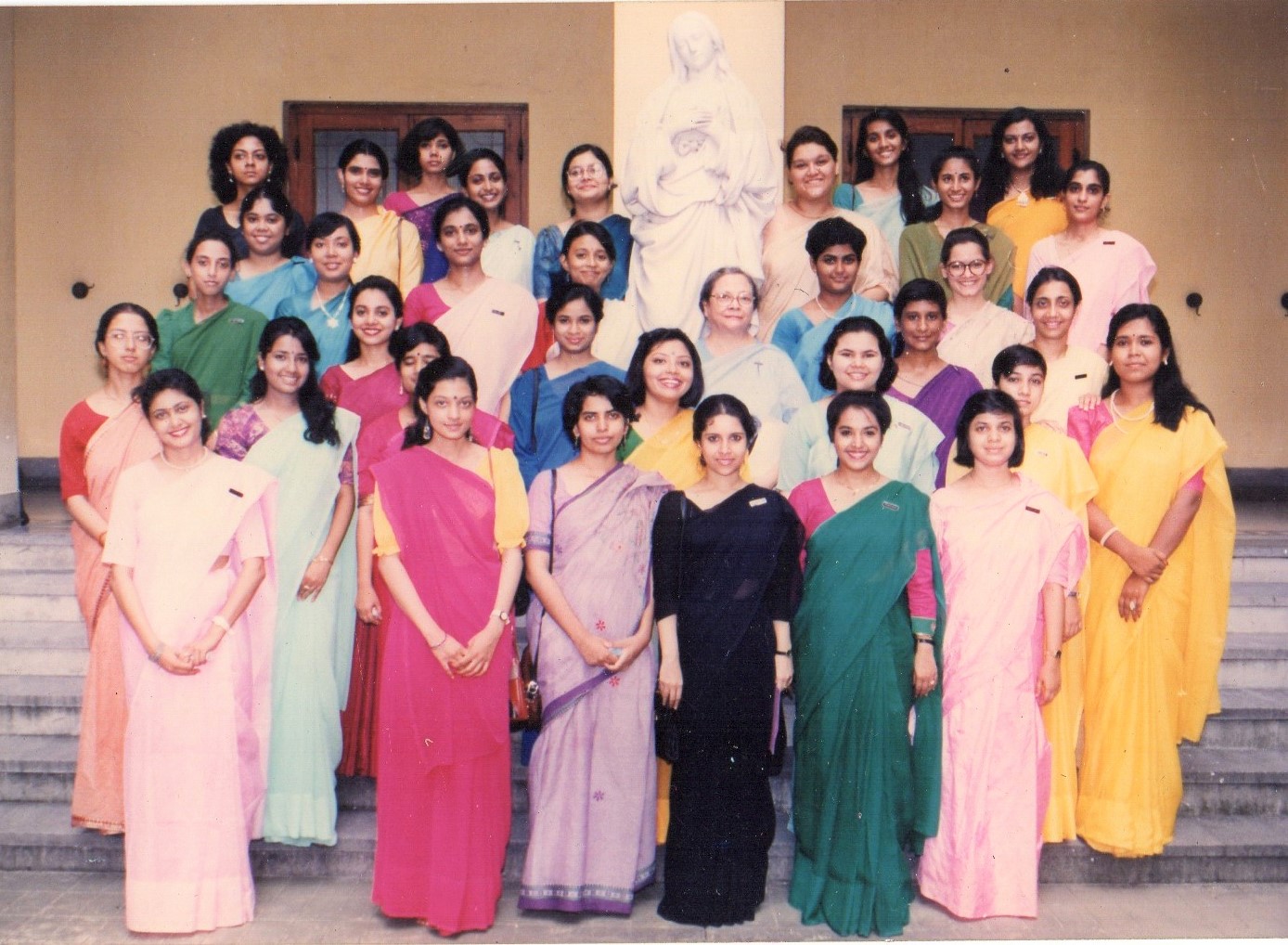
Image from her time on Loreto’s student leadership, as President of the Literary Society and Quiz Club.

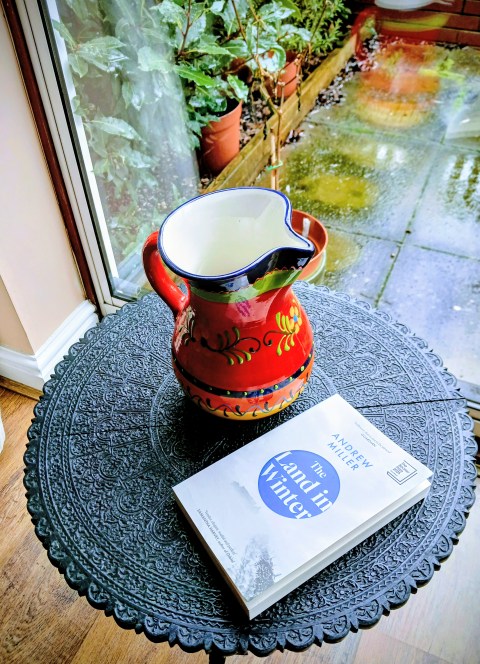
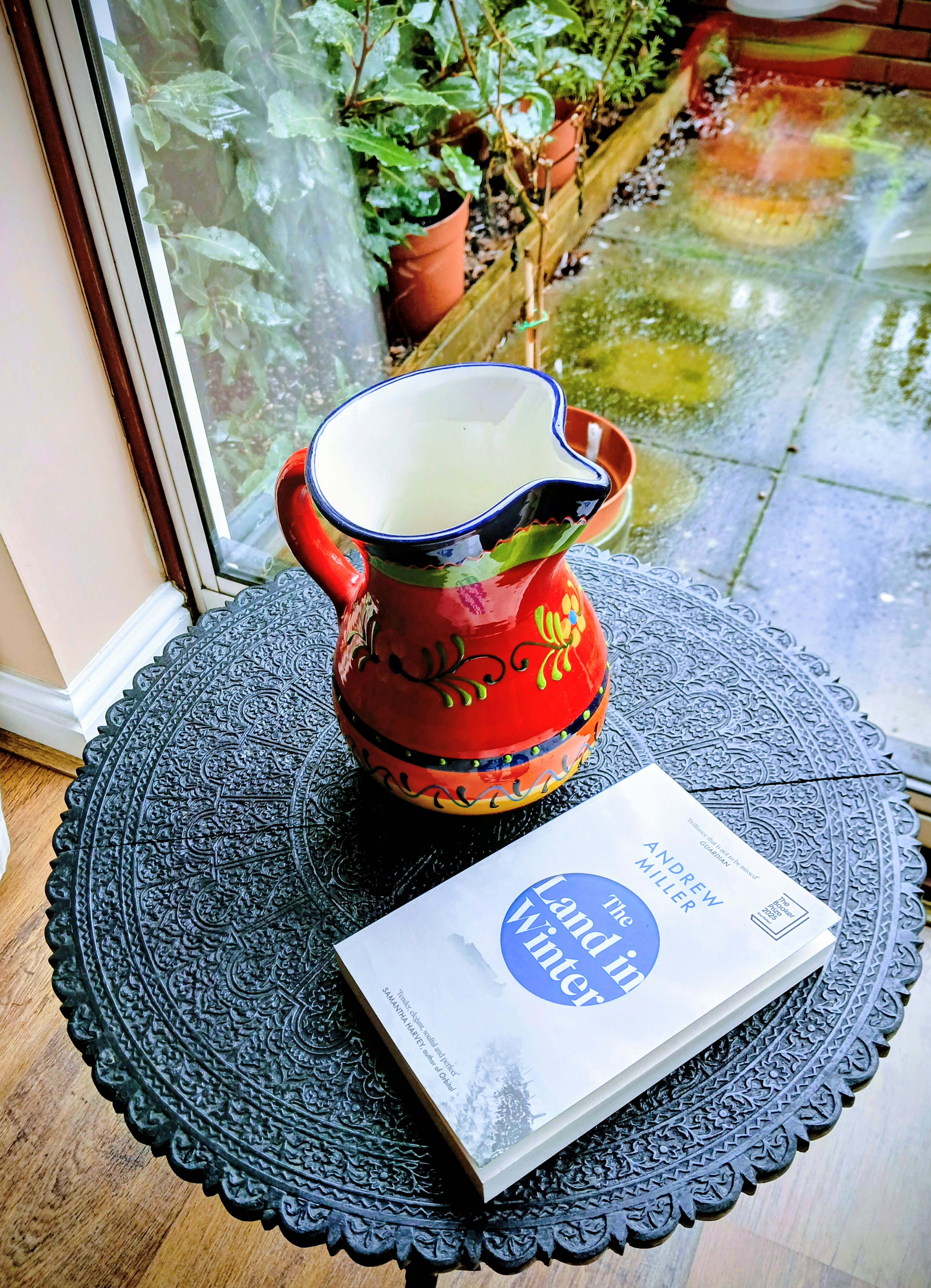
Shreya reviews Booker-shortlisted Andrew Miller’s The Land in Winter for broadsheets in India

Please click here to read the snappy review, but as there are typos, here it is in full:

“It is a truth universally acknowledged that storytelling is essential to humanity, developing society and connecting the world as it does. It’s a mystery, therefore, that storytelling is anathema to the gatekeepers and practitioners of the modern ‘literary’ novel, and plots, pariahs banished from their ivory-towered, exclusionary terrain. With riveting exceptions like Booker-winning Wolf Hall or the Pulitzer-shortlisted The Dutch House, prizewinning or nominated books wallow in the kind of navel gazing that have driven readers away in their gadzillions, even as ‘literature’s’ guardians, blinded by their own self-proclaimed brilliance, rue their shrinking foothold in the real world.

Having picked up Andrew Miller’s Booker-shortlisted The Land in Winter, I was surprised, therefore, by its semblance of a story. It makes an excruciatingly slow start, bogged down for the first hundred pages with details no-one needs to know (we’re informed of every trip his characters make to the bathroom – completely unnecessary even had the story been about a consortium of plumbers), then hits its stride and becomes engrossing for the next two hundred, before letting us down again with a weak, wussy finish.

It does, however, along the way, get you invested in a few of its characters, an art that appears largely forgotten in many of today’s novels. You don’t have to like them but if the author can’t get you interested in their fate then the story has failed, and Miller does succeed in making me care about Bill’s farm, his eccentric bull, and whether he lives or dies in the end (Bill, not the bull, though the latter provides some of the rare moments of humour in this book), and about mistreated Irene and whether she will ever escape her ghastly doctor-husband’s clutches or of the oddly sinister blind children’s home matron she finds herself beholden to after her misadventures in the snow. Gabby, the East European doctor, on the other hand, is an intriguing character left largely undeveloped, and what a waste of a good story that is! The trying-too-hard-to-be-interesting Rita, I couldn’t warm to, and Eric the Doctor, I wouldn’t touch with a ten-foot pole, or his married lover and cuckolded husband for that matter, but these things are subjective and they might float your boat.

The language is beautiful, the descriptions of the pivotal snow in particular, a character in its own right, but the author indulges himself in stylistics to such a degree, especially his love for layering each line with metaphor upon (sometimes mixed) metaphor, that these stretches not only go on forever, as a snowscape can seem to, but clog up the otherwise impressive literary flow.

In conclusion, dear reader, if you’re holidaying in the sunshine, with time on your hands, give this a go.”  

(c) Shreya Sen-Handley, for The Asian Age and Deccan Chronicle

Shreya is Head Judge for New Writers UK Flash Fiction Competition 2025

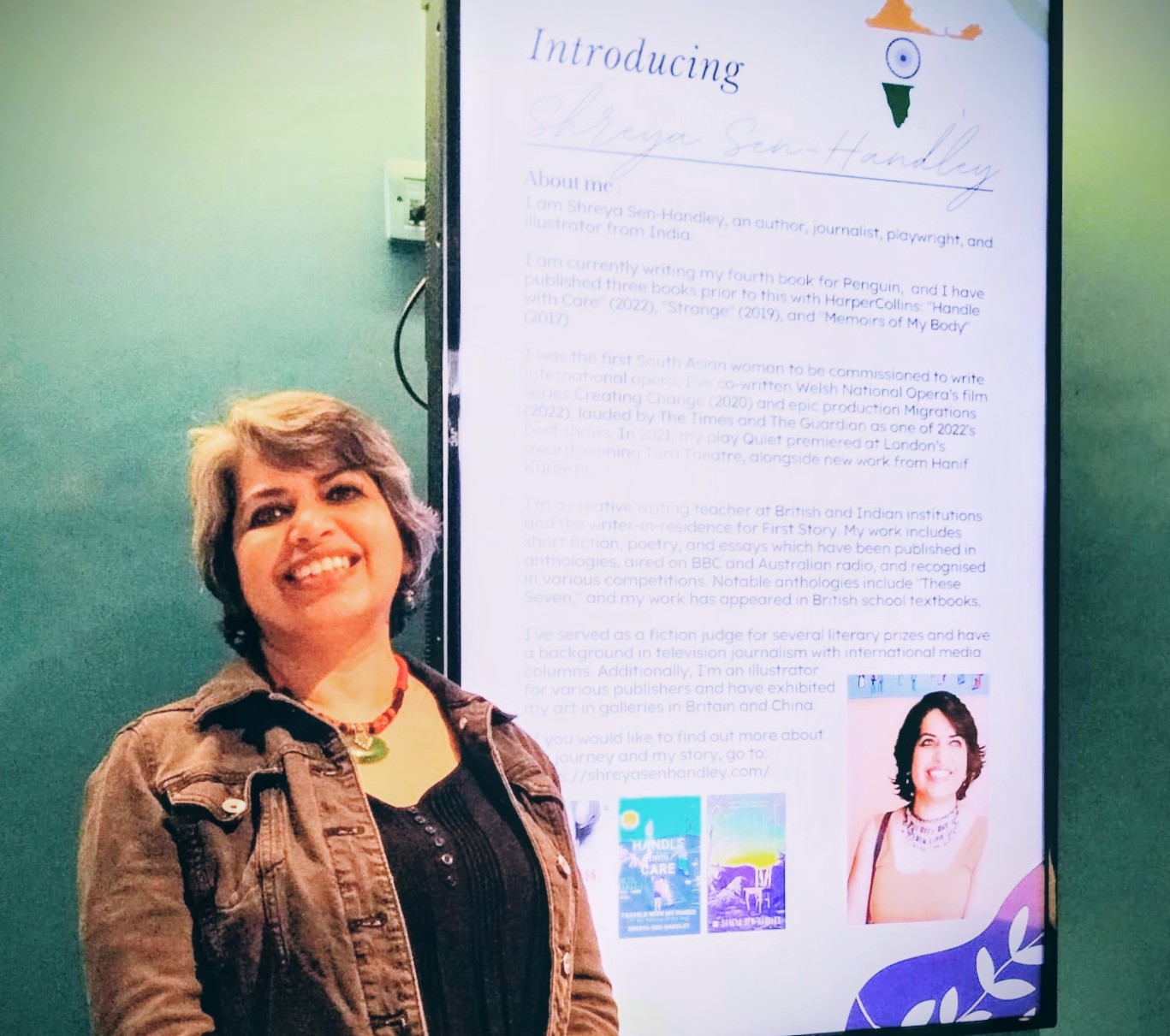
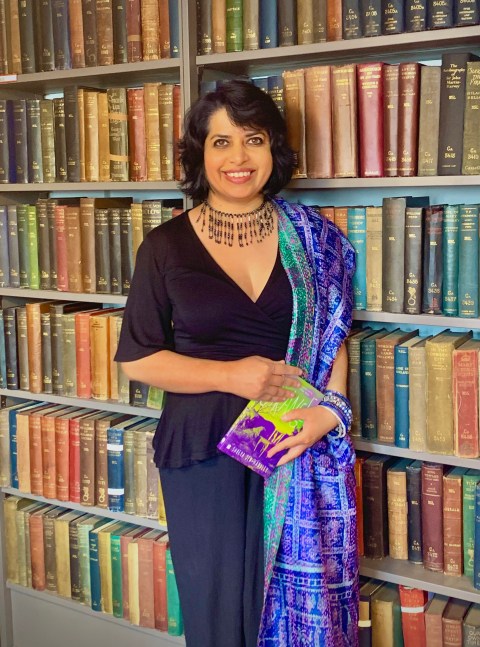
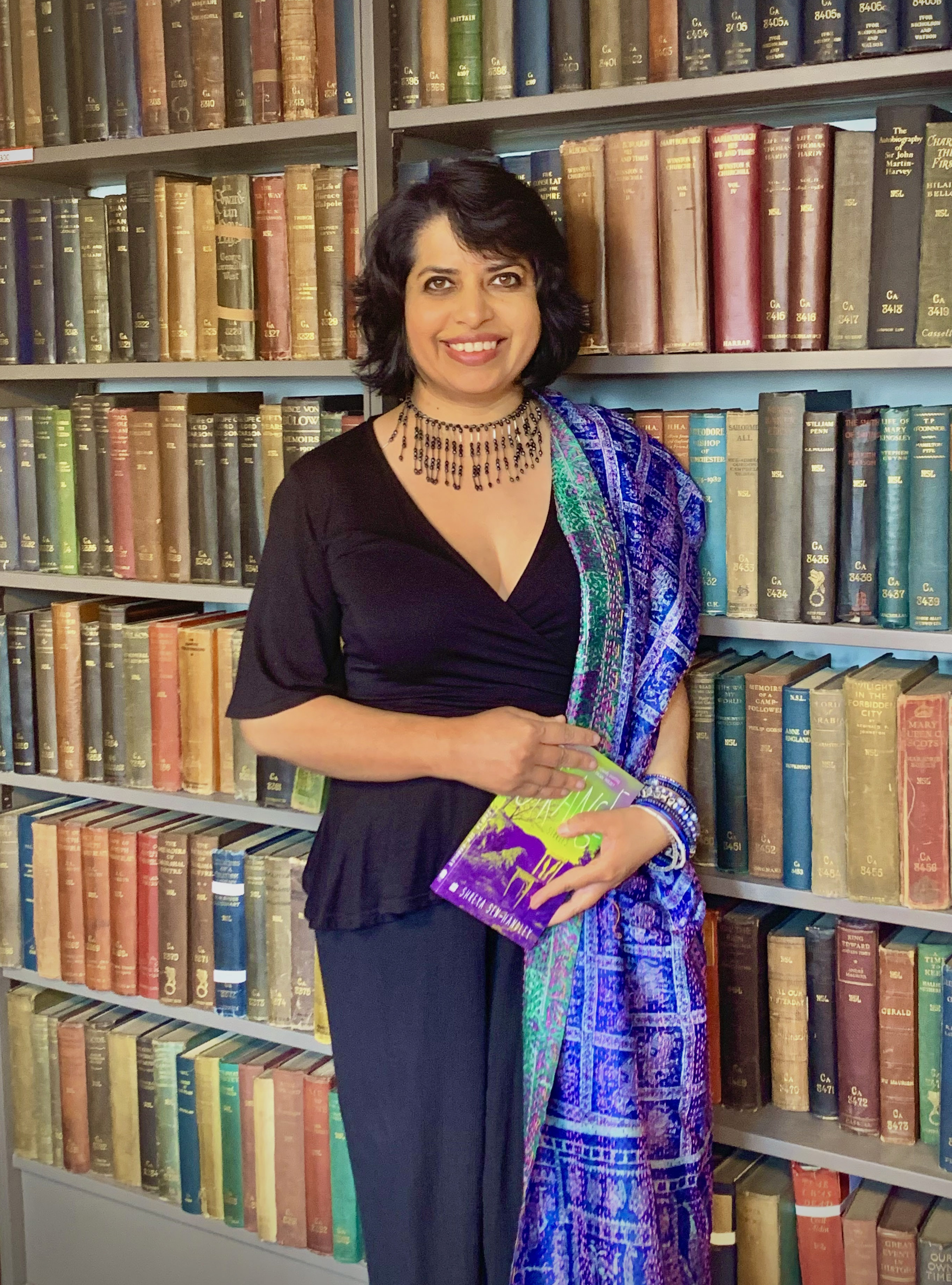
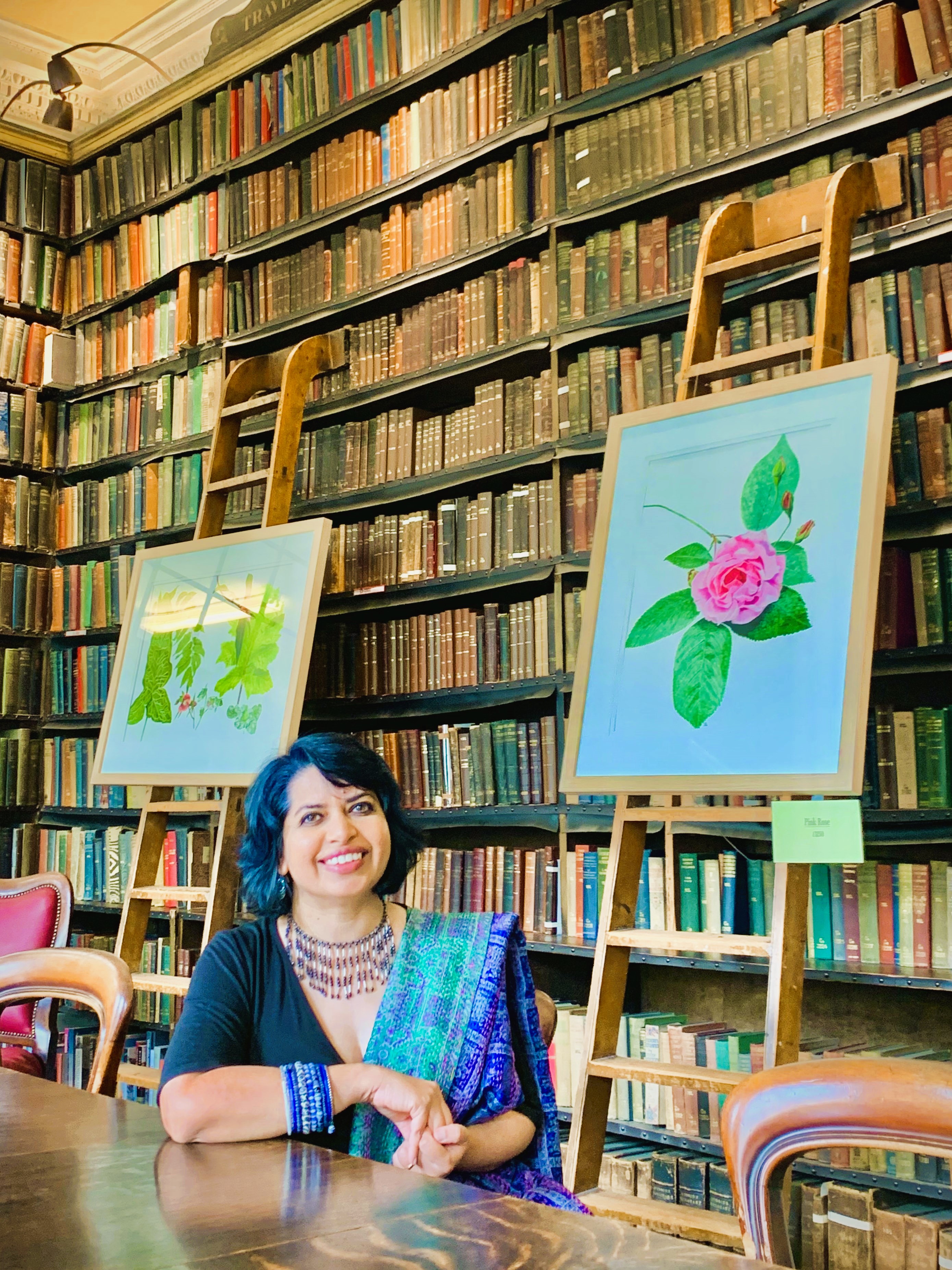
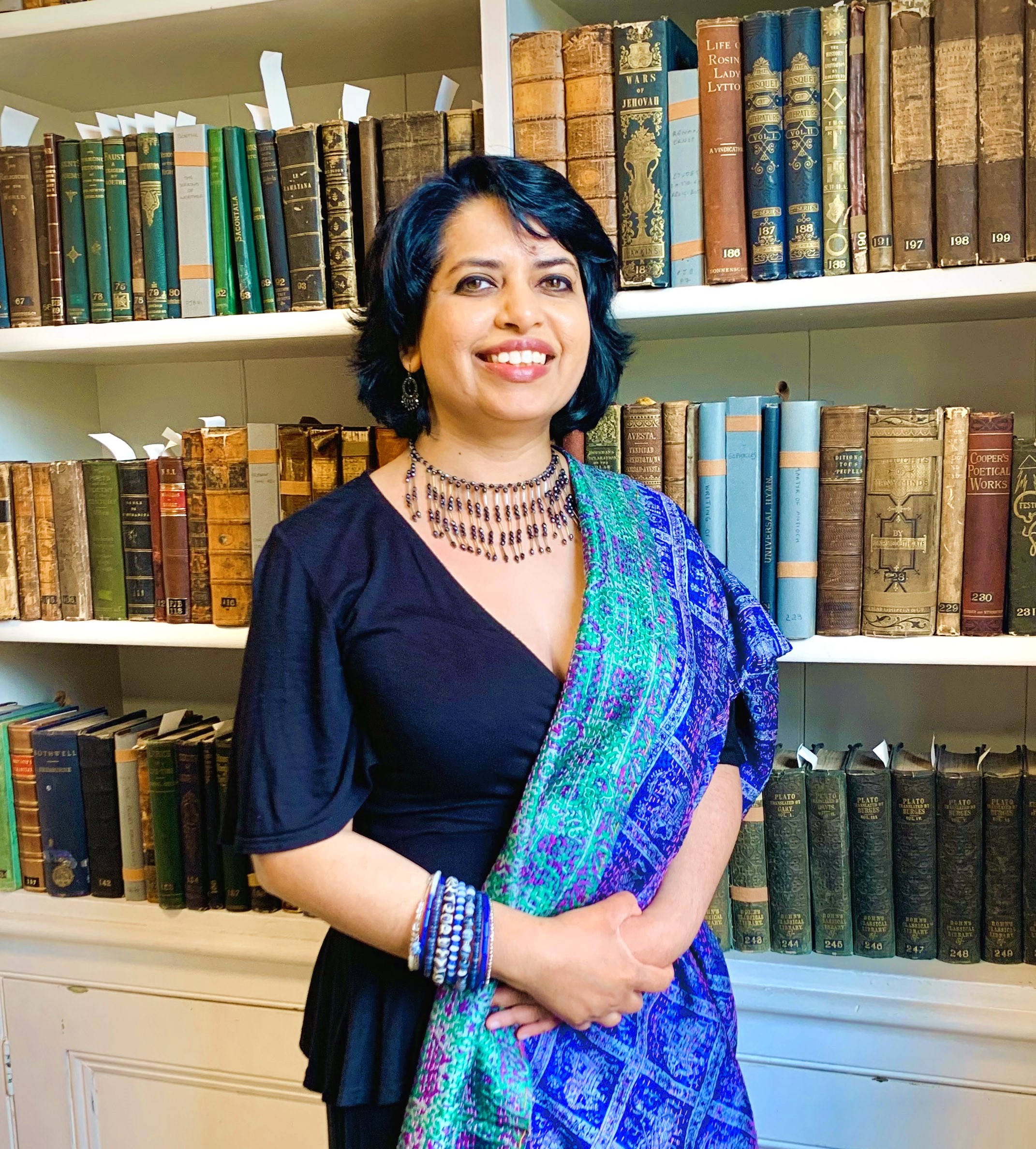
A photo of Shreya Sen-Handley taken at the Bromley House Library in Nottingham. This photo was taken for the purpose of a competition named Nottingham Women Writers Photography Project May 2023.

There are hundreds of entries already in, and if you are interested in participating, there are a few days left before the deadline! Please click here for the details and what Shreya as Head Judge hopes to find in the stories sent in, as well as about her long and varied writing career in an interview taken by New Writers UK

Photo and caption by Olivia Rose Barns, Shreya is holding her collection of short stories, ‘Strange’ (aka. ‘Strange:Stories’), published by HarperCollins in 2019

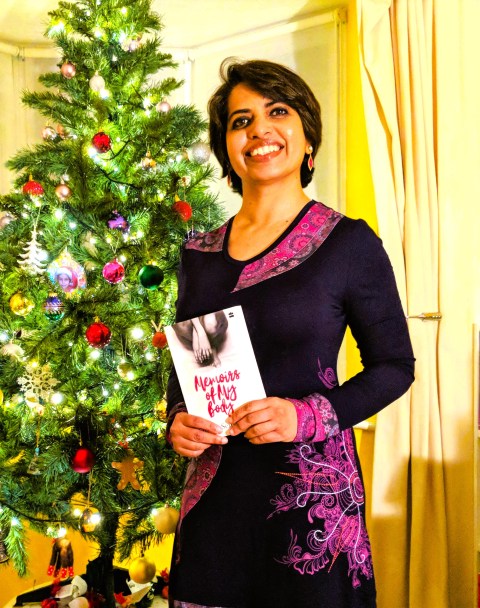
Professors of Durham and Bath Universities explore Shreya’s first book, ‘Memoirs of My Body’ (HarperCollins 2017) on vodcast

Maker:S,Date:2017-9-3,Ver:6,Lens:Kan03,Act:Lar02,E-ve

Over Christmas 2024, a British and a South African professor from the University of Durham (est.1832) and the University of Bath, discovered Shreya’s debut book ‘Memoirs of My Body’ (HarperCollins 2017) and decided to devote a whole episode of their Feminist Sports Lab book club vodcast to its exploration.

Professor Stephen Mumford, Head of Philosophy at Durham University, and Dr Sheree Bekker, Professor in the Department for Health at the University of Bath, authors of several successful books, talk about Shreya’s first book and its “incredible feminist writing” in an insightful, easy yet scholarly conversation. In their introduction to their discussion of the book, they have said:

“In this episode of FSL Book Club, Sheree Bekker and Stephen Mumford dive into Shreya Sen-Handley’s bold and evocative book, Memoirs of My Body. They discuss how this deeply personal memoir explores themes of identity, self-expression, and the evolving relationship we have with our bodies. Through candid storytelling and cultural critique, Sen-Handley’s work challenges societal norms and celebrates the power of self-acceptance. Sheree and Stephen reflect on the book’s impact, sharing their own insights on its relevance to body image, autonomy, and liberation. If you’re curious about the intersections of culture, feminism, and personal growth, this conversation is for you.”

Please click here for the snappy yet in-depth chat

Shreya’s 3rd book ‘Handle With Care’ (HarperCollins 2022) got lorryloads of royal and British media attention this month!

Please click on play to watch this 25-second HarperCollins video on the British media attention garnered by Shreya Sen-Handley’s third book ‘Handle With Care’ being presented to The Queen at Clarence House for Britain’s biggest literacy charity, the National Literacy Trust’s 30th anniversary. ‘Handle With Care’ (HarperCollins 2022) was selected from the many reader favourites nominated from across Britain for this special occasion.

Shreya’s fourth book to be published by world’s top publisher, Penguin

Shreya is also the author of award-winning ‘Memoirs of My Body’ (HarperCollins, 2017), short story collection ‘Strange’ (HarperCollins, 2019), and travelogue ‘Handle With Care’ (HarperCollins, 2022).

Please watch this space for further details!

Image: by Olivia Rose Barns at 200-year old Bromley House Library, for Nottingham Trent University and Nottingham UNESCO City of Literature

Shreya’s column for newspapers in October is about cold-shouldering the ‘wellness’ gurus as we find our own methods of managing in tough times

(Photo by Olivia Rose Barns for Nottingham UNESCO City of Literature and Nottingham Trent University)

“…chill out we must. Make the best of a bad job. Get our heads down and plough on. That I can do, and have always done, but this unwinding malarkey — how on this storm-tossed earth does one do that? Should I phone a friend? Ask the audience? Can Pink Floyd help me get comfortably numb?

My bestie said looking forward to his retirement sustained him. But the average age of retirement in most countries has been pushed to seventy, which seems too distant a prize to even contemplate! Gone are the days, even in prosperous western states, when you could retire in your fifties with a pension that kept you in clover for the rest of your life. A subject so triggering for France this year, that a million would-be-pensioners fought over it with the gendarmes, up and down the Champs Elysees!

How about a ‘mini-retirement’ Gary-Neville-style? We cackled when this millionaire footballer waxed lyrical about his ‘new’ idea; a centuries-old concept everyday folk call a holiday! He might be better acquainted with it in practice, however, as we plebs could do with a proper break. The average American, often working two jobs, gets ten paid annual holidays, whilst the rest of us, marginally better off, are too beset with health, financial, parental, and other problems to relax.”

Please click here to read the article in full